
Long drives should feel relaxing, not exhausting. Yet many drivers notice that after an hour or two behind the wheel, their car audio starts to feel harsh, tiring, or even irritating. The volume might not seem extreme, but your ears feel strained and your focus drops. This experience is known as listener fatigue, and it is far more common in car audio systems than most people realize.
Listener fatigue is not about weak equipment or bad music taste. It usually comes from imbalance, noise, and how the human brain processes sound over time. The good news is that you can reduce listener fatigue in car audio systems without replacing every component. With the right tuning approach and smarter listening habits, your system can stay clear, smooth, and comfortable for long drives.
What Listener Fatigue Really Is
Listener fatigue describes the mental and physical strain that builds up when your ears and brain work too hard to process sound. It is not always painful, but it often shows up as discomfort, irritability, or a strong urge to turn the music off.
Physical Fatigue vs Cognitive Fatigue
Physical fatigue happens in the ear itself. Loud sound pressure levels and sharp high frequencies stress the delicate structures inside the ear. Cognitive fatigue happens in the brain. When sound lacks balance or clarity, your brain has to fill in gaps and filter noise, which becomes tiring over time.
In car audio systems, both types often work together. Even at moderate volume, poor tuning can force your brain to work harder than it should.
Why Fatigue Builds Faster Inside a Car
Cars are acoustically challenging spaces. You sit closer to one speaker than the other. Glass, plastic, and leather reflect sound unevenly. Road noise constantly competes with your music. All of this increases listening effort, which speeds up fatigue compared to a quiet home setup.
The Biggest Causes of Listener Fatigue in Car Audio
Reducing fatigue starts with identifying what causes it. Most issues fall into a few predictable categories.
Excessive Volume and Sound Pressure Levels
Louder sound feels exciting at first, but high sound pressure levels push your ears into stress mode. Over time, your hearing becomes less sensitive, and your brain works harder to keep details clear. This is one of the fastest ways to trigger listener fatigue during long drives.
Harsh High Frequencies and Upper Mids
The human ear is most sensitive in the upper midrange, roughly between 2 kHz and 5 kHz. When this range is overemphasized, vocals sound shouty and cymbals feel sharp. Even if the system sounds “detailed,” that detail becomes tiring quickly.
Distortion and Poor Signal Quality
Distortion is exhausting for the brain. Clipping amplifiers, stressed speakers, and low-quality audio sources all create subtle distortion. Your ears may not recognize it as noise, but your brain notices and works harder to interpret the sound.
Why EQ Plays a Major Role in Fatigue
Equalization shapes how your system sounds more than almost any other setting. When EQ is poorly set, listener fatigue is almost guaranteed.
Frequency Imbalance Increases Listening Effort
If certain frequencies dominate, your brain constantly adjusts focus. Too much bass masks detail. Too much treble creates sharp edges. An uneven midrange makes vocals feel disconnected. Balanced frequency response allows your brain to relax.
Why Smiley-Face EQ Curves Cause Fatigue
The popular “smiley-face” EQ boosts bass and treble while cutting mids. It sounds fun at first, yet it removes natural vocal presence and exaggerates extremes. Over time, this forces your brain to work harder to maintain clarity.
Better EQ Philosophy for Comfortable Listening
Start with a flat EQ. Make small cuts instead of large boosts. Reduce harsh frequencies before increasing others. This approach keeps sound smooth and lowers listening stress.
Volume Control and Dynamic Range
Volume management plays a bigger role in fatigue than many drivers expect.
Why Louder Is Not Always Better
As volume rises, distortion increases and your ears lose sensitivity. You may turn the volume up even more to regain clarity, which accelerates fatigue. Comfortable systems deliver detail without relying on high volume.
Managing Dynamics for Long Drives
Music with extreme dynamic swings can become tiring in noisy environments. Gentle compression or consistent volume levels help maintain comfort without killing musical enjoyment.
Road Noise, Cabin Noise, and Listener Fatigue
Road noise is one of the most overlooked contributors to fatigue in car audio.
How Background Noise Raises Listening Effort
When road and tire noise mask low-level details, your brain strains to separate music from noise. This effort adds up quickly, especially at highway speeds.
Passive Noise Reduction Strategies
Sound deadening materials reduce vibrations and lower background noise. Treating doors, floors, and trunk areas helps music sound clearer at lower volume.
Why Noise Reduction Allows Lower Volume
Once noise drops, you no longer need to overpower it. Lower volume means less ear strain and longer listening comfort.

Speaker and System Setup Factors That Affect Fatigue
Speaker behavior and system configuration strongly influence how tiring a system feels.
Poor Imaging and Phase Issues
If vocals pull to one side or instruments seem scattered, your brain struggles to lock onto the soundstage. This instability increases cognitive load and speeds up fatigue.
Crossover and Speaker Mismatch
Incorrect crossover points cause speakers to play frequencies they cannot handle cleanly. Overlapping ranges create interference, which reduces clarity and comfort.
How Time Alignment and Balance Reduce Fatigue
Time alignment and balance adjustments directly reduce listening effort.
Why Arrival Time Affects Comfort
When sound from different speakers reaches your ears at different times, your brain constantly compensates. Time alignment corrects this by synchronizing arrival time, creating a stable center image.
Driver-Focused Balance Adjustments
Since the driver sits closer to one speaker, slight balance correction often improves comfort. A stable center vocal reduces mental strain.

Source Quality and Music Content Matter
Not all audio content is created equal, and source quality plays a role in fatigue.
Poorly Mastered Tracks and Fatigue
Heavily compressed or clipped recordings sound loud but lack breathing room. These tracks often cause fatigue faster than well-mastered music.
Streaming Quality and File Formats
Low-bitrate streams remove subtle detail and add artifacts. Higher-quality streams or lossless files reduce strain by preserving natural dynamics.
Lifestyle and Listening Habits That Influence Fatigue
Listener fatigue is not caused by audio settings alone.
Listening Duration and Breaks
Long, uninterrupted listening sessions build fatigue. Short breaks give your ears and brain time to reset, restoring clarity.
Stress, Focus, and Multitasking
Driving already demands attention. Stress and mental load make sound feel more tiring. Comfortable audio should support focus, not fight it.
Common Mistakes That Make Listener Fatigue Worse
- Boosting treble for instant clarity
- Chasing loudness instead of balance
- Ignoring road noise and vibration
- Upgrading gear without proper tuning
- Copying EQ presets without listening
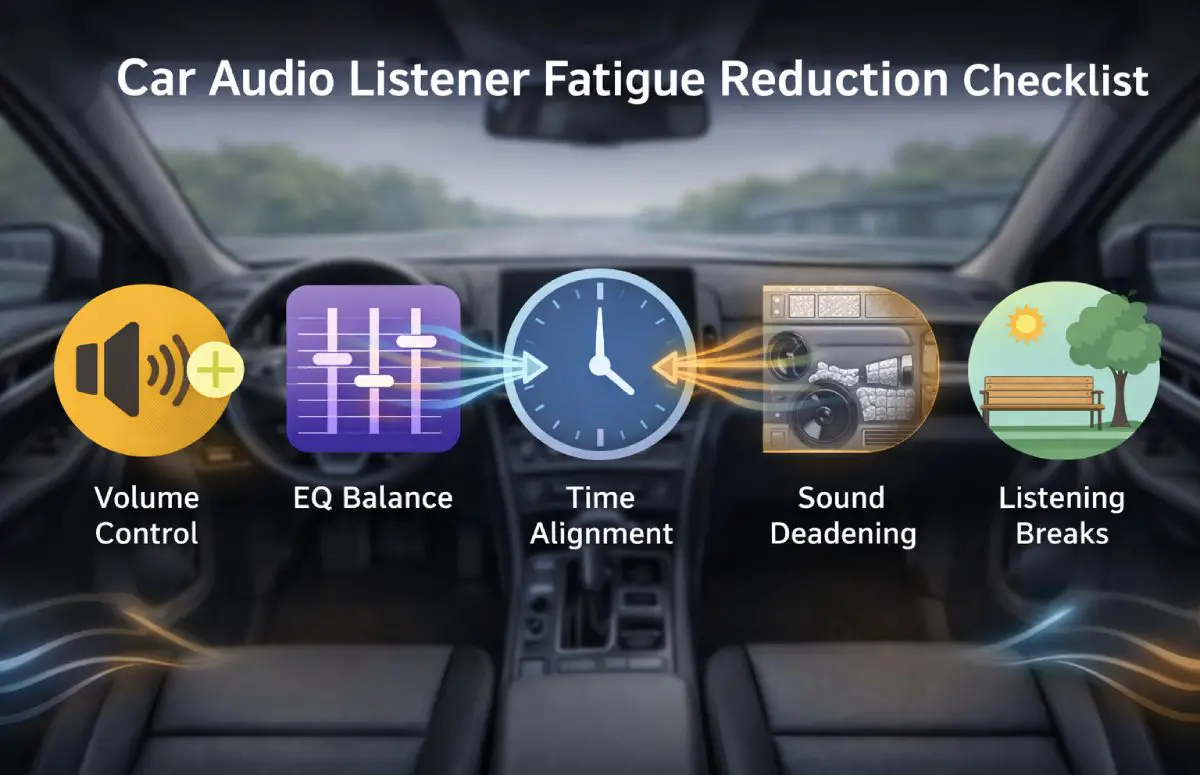
Practical Checklist to Reduce Listener Fatigue
- Lower volume slightly and listen longer
- Flatten EQ and reduce harsh frequencies
- Improve balance and imaging
- Reduce cabin noise where possible
- Take listening breaks on long drives
Frequently Asked Questions
Can car audio cause long-term hearing damage?
Yes, extended exposure to loud or harsh sound increases the risk of hearing damage and fatigue.
Why does my system sound tiring even at low volume?
Frequency imbalance, distortion, and poor imaging often cause fatigue even when volume seems reasonable.
Is bass or treble more fatiguing?
Excessive treble usually causes faster fatigue, but overpowering bass can mask detail and increase strain.
Does sound deadening really help?
Yes. Lower background noise allows comfortable listening at lower volume.
Can DSP reduce listener fatigue?
Yes. DSP allows precise control over timing, EQ, and balance, which greatly improves comfort.
Final Thoughts on Reducing Listener Fatigue
Listener fatigue is not a sign that your system is bad. It is a sign that something is out of balance. When volume, frequency response, timing, and noise control work together, your ears can relax.
A comfortable car audio system keeps you focused, calm, and engaged, even on long drives. By tuning for balance instead of excitement, you create a system that sounds good not just for five minutes, but for hours.