
If you’ve ever pushed your audio system a little too hard and noticed harsh sound, crackling, or sudden distortion, you’ve likely encountered peaking or clipping. These two terms are often used interchangeably, yet they describe very different problems inside an audio signal. Confusing them leads to poor sound quality, listening fatigue, and in some cases, damaged equipment.
Audio peaking and clipping show up everywhere. You’ll hear about them in car audio forums, recording studios, live sound setups, and even casual discussions about volume levels. This guide breaks both concepts down in plain language. By the end, you’ll know exactly what peaking is, what clipping is, how they differ, and how to avoid both in real-world audio systems.
What Is Audio Peaking?
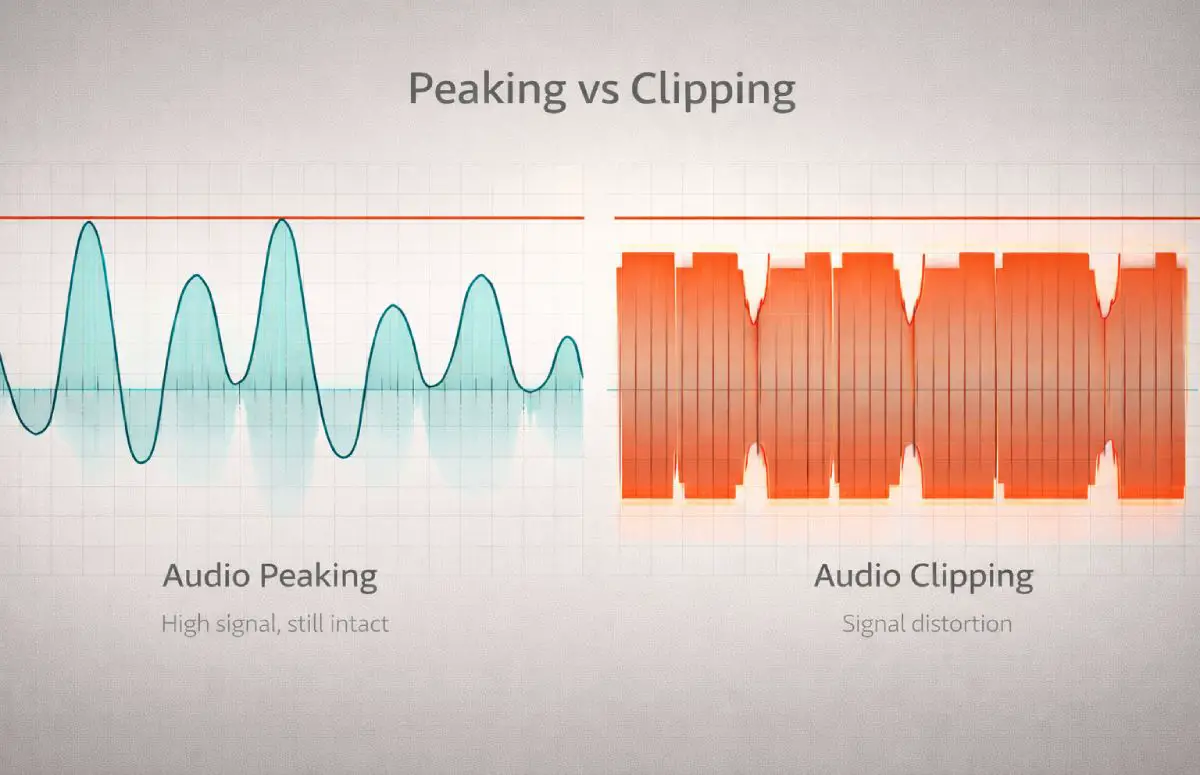
Audio peaking refers to moments when a signal reaches very high levels, close to the maximum a system can handle. Every sound wave has peaks and valleys. Peaks are the loudest parts of the waveform, such as a drum hit or bass note.
Peaking becomes a concern when those loud moments approach the system’s upper limit. At this stage, the audio is still intact, but it is dangerously close to distortion.
Definition of Audio Peaking
A peak is simply the highest point of an audio waveform at a given moment. Audio peaking occurs when those points rise near the system’s maximum allowable level. In digital systems, this limit is called 0 dBFS. In analog systems, it relates to voltage limits.
Peaking itself is not distortion. It is a warning sign that the signal is running out of headroom.
How Peaking Appears on Meters
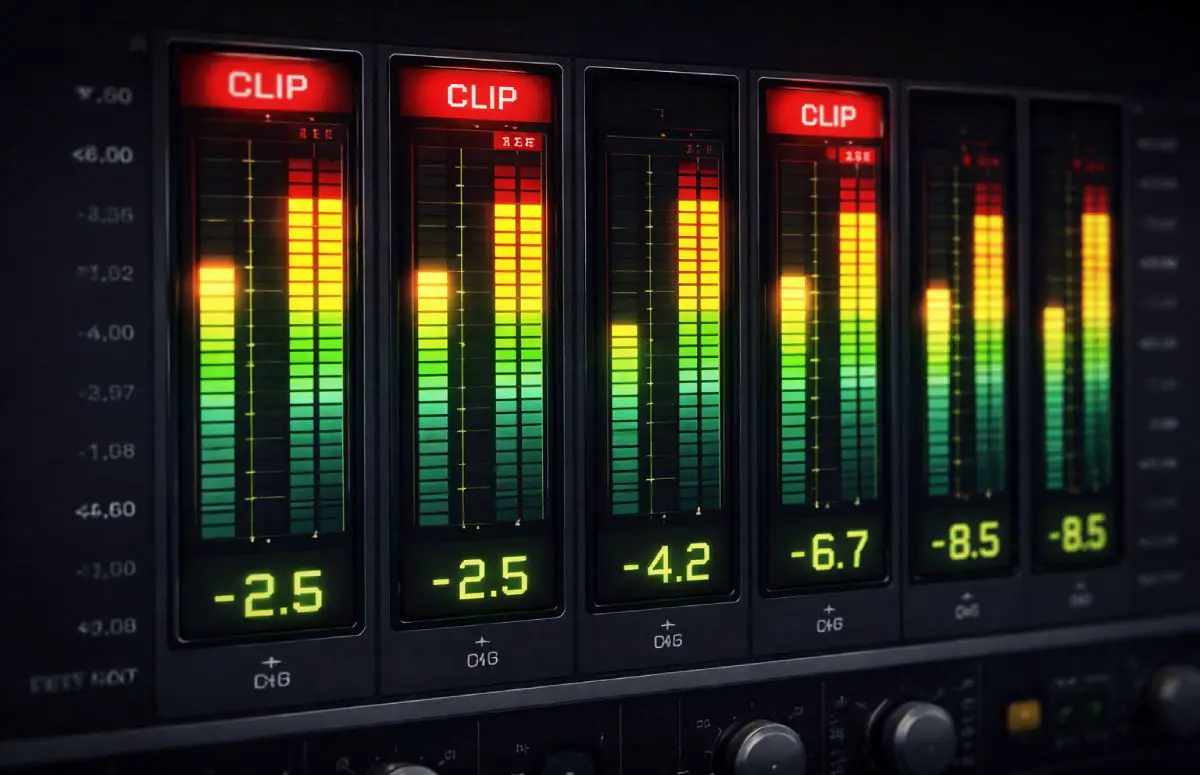
Most audio meters show peaking visually. When levels approach the top of the meter or hit the red zone, peaking is happening. Peak meters respond quickly to short transients, unlike RMS meters that show average loudness.
A brief peak may not sound bad at all, yet repeated peaks indicate a setup that needs adjustment.
Common Causes of Audio Peaking
Peaking often results from gain set too high at some stage of the signal chain. Loud recordings, aggressive EQ boosts, or sudden transients like kick drums can also push signals into peak territory.
In car audio, high head unit volume combined with excessive amplifier gain is a frequent cause.
What Is Audio Clipping?
Audio clipping happens when the signal goes beyond what the system can reproduce. At this point, the waveform is no longer preserved. Instead, its peaks are cut off, creating distortion.
Once clipping occurs, sound quality suffers immediately.
Definition of Audio Clipping
Clipping occurs when an audio signal exceeds the maximum amplitude the system can handle. Since the system cannot reproduce anything beyond that limit, it “clips” the top and bottom of the waveform.
This truncation permanently alters the sound.
How Clipping Alters the Audio Signal
When a waveform is clipped, it becomes flatter at the peaks. This shape introduces extra high-frequency harmonics that were never part of the original sound.
These harmonics are what make clipped audio sound harsh, brittle, and fatiguing.
Why Clipping Is Almost Always Undesirable
Clipping removes dynamics, destroys clarity, and creates distortion that listeners find unpleasant. In playback systems, clipping also increases the risk of speaker damage.
Unlike peaking, clipping is no longer a warning. It is the problem itself.
Audio Peaking vs Clipping – Core Differences
Although closely related, peaking and clipping represent two different stages of signal stress.
Signal Level vs Signal Damage
Peaking describes how close a signal is to the system’s limit. Clipping describes what happens after that limit is crossed. One is a measurement issue, the other is actual distortion.
Can You Have Peaking Without Clipping?
Yes. Systems with enough headroom can handle short peaks without distortion. That headroom acts as a safety buffer.
Clipping occurs only when peaks exceed the available headroom.
Visual Comparison of Meters and Waveforms
On meters, peaking shows levels touching the top. On waveforms, clipping shows flattened tops. This difference explains why users may see peaking without hearing distortion.
Digital vs Analog Clipping
The type of system involved changes how clipping behaves.
Digital Clipping Explained
Digital systems have a hard ceiling at 0 dBFS. Once reached, there is no room above it. Any signal beyond that point is clipped instantly.
This produces sharp, unpleasant distortion that is difficult to mask.
Analog Clipping Explained
Analog clipping tends to be more gradual. As circuits approach their limits, distortion increases slowly rather than abruptly.
This softer behavior is why analog saturation is sometimes used creatively.
Why Digital Clipping Sounds Worse
Digital clipping creates abrupt waveform edges. These generate strong high-frequency artifacts that listeners perceive as harshness.
Once recorded, digital clipping cannot truly be repaired.
How Peaking and Clipping Affect Sound Quality
Both issues harm audio, but clipping causes far greater damage.
Impact on Clarity and Detail
Clipped audio loses subtle details. Instruments blur together, and vocals lose natural tone.
Peaking alone may sound fine, yet it leaves no margin for dynamic passages.
Listener Fatigue and Harshness
Harsh distortion forces the ear to work harder. Over time, this leads to listening fatigue.
Systems free from clipping sound smoother and remain comfortable at higher volumes.
Can Clipping Damage Speakers and Amps?
Yes. Clipping is not just unpleasant to hear. It can be destructive.
Heat and High-Frequency Energy
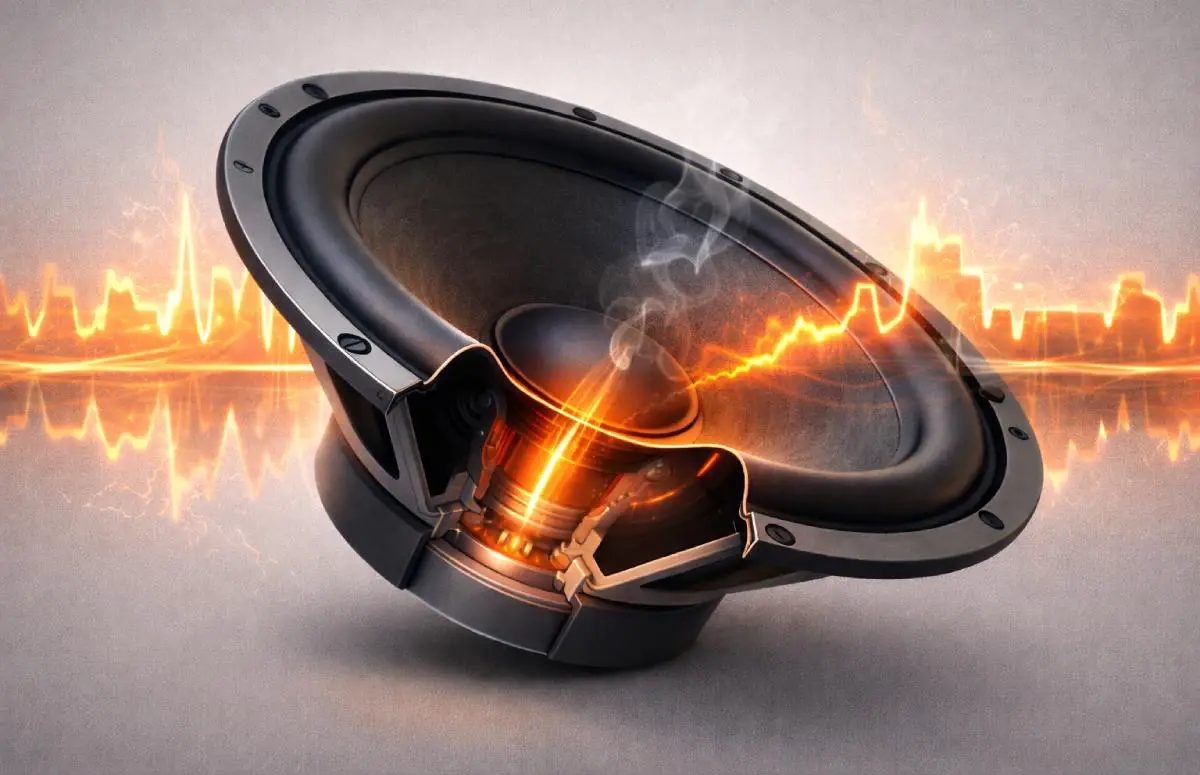
Clipped signals contain excessive high-frequency energy. Tweeters are especially vulnerable because they are not designed for sustained power at those frequencies.
Excess heat can damage voice coils over time.
Why Too Much Power Isn’t the Only Issue
Many people believe speaker damage only comes from overpowering. In reality, distorted power is often more dangerous than clean power at higher levels.
Peaking and Clipping in Car Audio Systems
Car audio systems face unique challenges due to limited voltage and space.
Amplifier Gain and Head Unit Volume
Gain is not a volume control. It matches amplifier input sensitivity to the source signal.
Incorrect gain settings cause clipping long before the volume knob reaches maximum.
Subwoofer Clipping vs Speaker Clipping
Subwoofer clipping often sounds like loss of control or popping. Speaker clipping creates harsh midrange and treble distortion.
Both reduce system lifespan.
Peaking and Clipping in Recording and Streaming
These concepts also matter outside playback systems.
Recording Hot Signals
Recording levels set too high clip preamps or converters. Once clipped, audio cannot be restored fully.
Streaming Loudness and Normalization
Some music remains clipped due to loudness competition. Streaming normalization reduces level but does not remove distortion.
How to Prevent Peaking and Clipping
Prevention starts with proper setup.
Proper Gain Staging
Each stage in the signal chain should operate below its maximum. This preserves headroom.
Balanced gain staging prevents peaking from accumulating into clipping.
Using Compression and Limiting
Compression controls dynamics. Limiting catches fast peaks before clipping occurs.
Used properly, these tools protect sound quality.
Monitoring Tools That Help
Peak meters, true peak meters, and clip indicators provide visual warnings before distortion becomes audible.
Intentional Clipping and Saturation
In creative environments, clipping may be used intentionally.
Creative Uses in Music Production
Guitar distortion and analog saturation rely on controlled clipping.
This is carefully managed and not accidental.
Why This Does Not Apply to Playback Systems
Playback systems are not designed for controlled distortion. Clipping here offers no artistic benefit.
Frequently Asked Questions
Is peaking always bad in audio?
No. Short peaks are normal, but frequent peaking reduces headroom and increases clipping risk.
Can clipping happen even if volume isn’t maxed out?
Yes. Poor gain structure can cause clipping at moderate volume levels.
How do I know if my speakers are clipping?
Harsh distortion, crackling, and loss of clarity are common signs.
Does clipping mean my amplifier is underpowered?
Not always. Clipping often results from incorrect gain settings.
Is digital clipping repairable after recording?
No. Once clipped, digital audio cannot be fully restored.
Peaking Is a Warning, Clipping Is the Problem
Audio peaking and clipping are closely linked but not the same. Peaking warns that a signal is nearing its limits. Clipping confirms those limits have been crossed.
By maintaining proper gain staging, monitoring levels, and respecting headroom, you can avoid distortion and protect your equipment. Clean audio is not about avoiding loud sound. It is about controlling it correctly.