
Digital signal processors get a lot of attention in the audio world. Many people assume DSP is the only way to fix muddy bass, harsh highs, or weak imaging. In reality, sound quality problems often start long before the signal reaches any digital processing stage.
If your system sounds off, the room, placement, and basic setup are usually the real culprits. By addressing these fundamentals, you can achieve cleaner, more natural sound without relying on DSP units. This guide explains practical, proven ways to improve sound quality using physical adjustments and smart setup techniques.
Why DSP Isn’t Always the Best First Solution
DSP can correct frequency imbalances, but it cannot fully fix physical acoustic problems. Many issues come from reflections, standing waves, and poor placement rather than the signal itself.
What DSP Can Fix and What It Can’t
DSP works best at adjusting tonal balance. It can boost or cut certain frequencies, smooth response curves, and apply time alignment in some cases. Still, it cannot stop sound from bouncing off hard walls or cancel out deep bass nulls caused by room dimensions.
When reflections arrive at your ears milliseconds after the direct sound, clarity suffers. DSP cannot remove these reflections because they happen in the air, not inside the signal chain.
When DSP Becomes a Band-Aid
Heavy EQ often leads to unnatural sound. Boosting frequencies to compensate for placement issues increases distortion and reduces headroom. In many systems, DSP hides the real problem instead of solving it.
Speaker Placement: The Most Powerful Free Upgrade
Speaker placement has more impact on sound quality than almost any electronic upgrade. Small changes can transform imaging, bass response, and tonal balance.
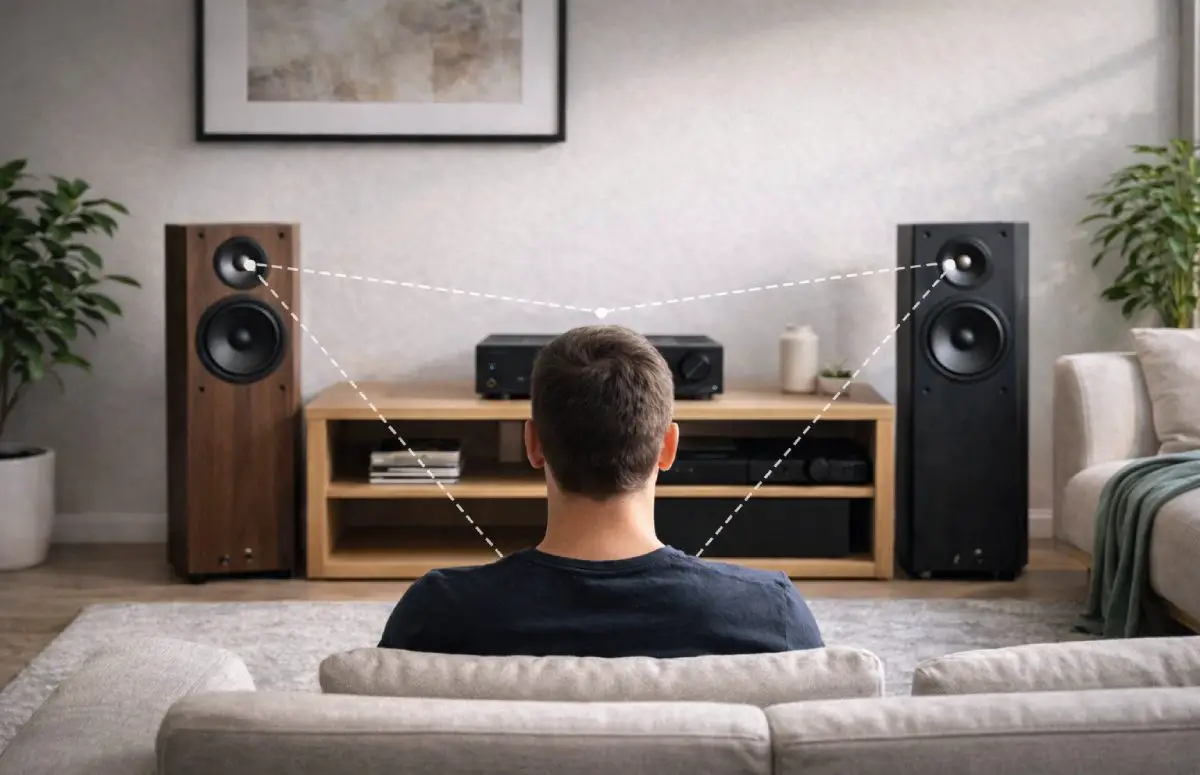
Distance, Height, and the Listening Triangle
A proper stereo triangle places the listener and speakers at equal distances. Tweeters should sit close to ear level when seated. This alignment improves clarity and center imaging.
Speakers placed too low or too high shift tonal balance and blur vocals.
Room Geometry and Wall Distance
Placing speakers too close to walls increases bass but often causes boominess. Pulling them away from the front wall usually tightens low frequencies and improves midrange clarity.
Side wall distance also matters. Unequal spacing leads to uneven reflections and poor stereo balance.
Small Adjustments That Make Big Differences
Moving speakers just a few inches can change bass response dramatically. Listening while making incremental adjustments helps you find the best position without measuring tools.
The Role of Room Acoustics in Sound Quality
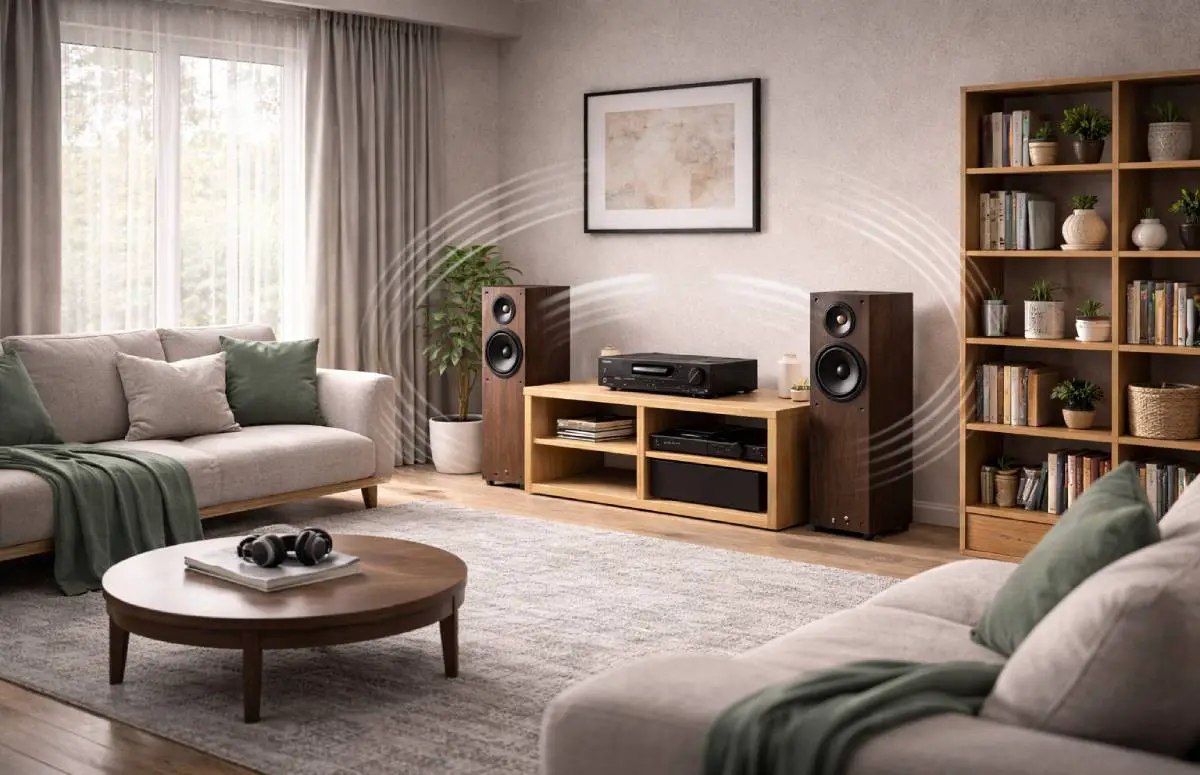
The room itself acts like a giant acoustic filter. Hard surfaces reflect sound, while soft materials absorb it.
How Reflections Degrade Clarity and Imaging
Early reflections from side walls, floors, and ceilings smear detail and collapse the soundstage. Reducing these reflections allows your ears to focus on the direct sound from the speakers.
This change alone can make vocals clearer and instruments easier to place.
Reverberation Time and Listener Fatigue
Rooms with long reverberation times sound lively but often tiring. Excess echo makes music feel louder and less controlled. Shortening reverb improves focus and reduces fatigue during long listening sessions.
Using Furniture and Décor as Acoustic Treatment
You do not need professional panels to improve acoustics. Everyday items can make a meaningful difference.
Rugs, Curtains, and Upholstered Furniture
Rugs absorb floor reflections that otherwise bounce directly to your ears. Curtains soften window reflections, while sofas and chairs reduce midrange echoes.
These simple additions often improve clarity without changing equipment.
Bookshelves as Natural Diffusers
Bookshelves filled with uneven objects scatter sound in multiple directions. This diffusion preserves a sense of space while reducing harsh reflections.
Affordable and DIY Acoustic Treatments
Targeted acoustic treatment offers more control than furniture alone.
Absorption Panels Explained
Absorption panels placed at first reflection points reduce early reflections. These spots are usually found by sitting at the listening position and using a mirror along the walls.
Panels do not need to cover every surface. Strategic placement works best.
Bass Traps Without DSP
Bass builds up in corners where pressure is highest. Bass traps placed in these areas reduce boominess and improve low-frequency balance.
This approach addresses bass issues more effectively than EQ alone.
DIY vs Commercial Solutions
DIY panels using mineral wool or fiberglass offer strong performance at a lower cost. Commercial panels provide convenience and aesthetics. Both approaches improve sound when placed correctly.
Listening Position Matters More Than You Think
Your seat location affects bass response and imaging as much as speaker placement.
Avoiding Room Nodes and Nulls
Sitting too close to walls or directly in the center of the room often places you in bass nulls. Moving the seat forward or backward changes low-frequency response instantly.
Achieving Better Balance Without Electronics
Centering the listening position between speakers improves stereo balance. Equal distances help vocals lock into place and reduce phase issues.
Gain Staging and Source Quality Without DSP
Clean sound starts at the source.
Proper Volume and Gain Relationships
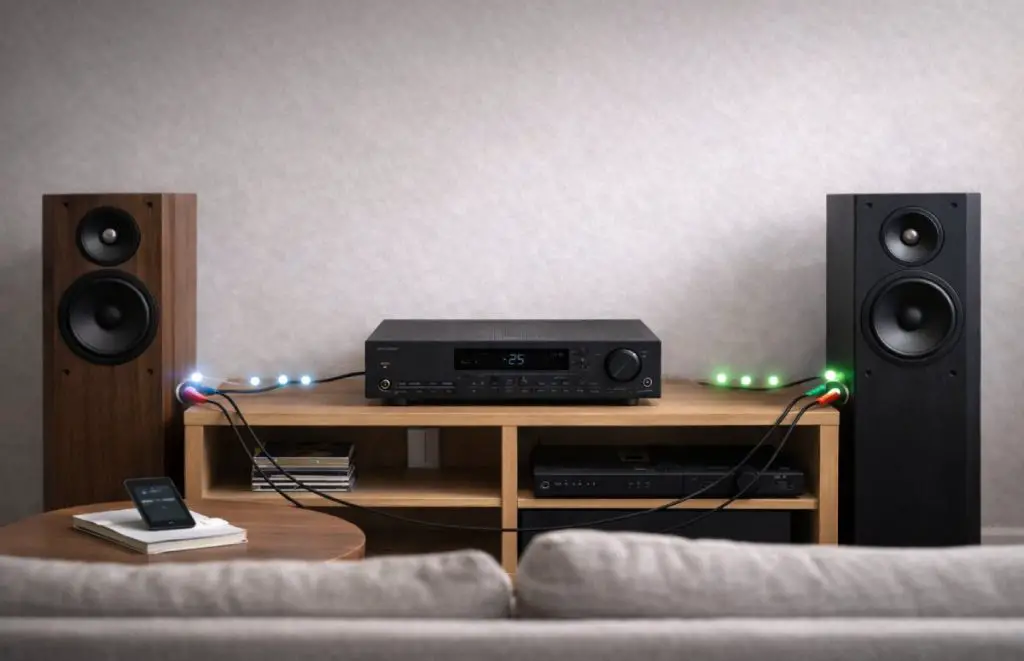
Running components too hot increases distortion. Keep source output strong but avoid maxing out volume controls. Balanced gain staging preserves dynamics and clarity.
Source Quality Over Processing
High-quality recordings sound better than heavily processed files. Lossless formats and well-mastered tracks reveal improvements made through placement and acoustics.
Common Mistakes That Hurt Sound Quality
Many systems suffer due to avoidable setup errors.
Overcrowded Rooms and Hard Surfaces
Glass tables, bare walls, and tile floors increase reflections. Balancing hard and soft surfaces improves clarity.
Poor Speaker Placement Habits
Placing speakers in corners or uneven distances causes bass issues and weak imaging. Correcting placement often solves these problems quickly.
Passive Improvements vs DSP: Which Works Better?
Passive improvements address sound problems at their source.
Why Physical Fixes Sound More Natural
Physical changes improve time-domain accuracy. Sound arrives more coherently, which the brain interprets as realism.
When DSP Still Makes Sense
DSP works well in cars and complex systems where placement options are limited. In rooms, passive fixes usually deliver better results first.
Frequently Asked Questions
Can I get great sound without DSP?
Yes. Proper placement, acoustics, and setup often provide bigger improvements than DSP.
What improves sound quality the most for free?
Speaker placement and listening position adjustments cost nothing and yield major gains.
Do room acoustics matter more than speakers?
In many cases, yes. Even great speakers sound poor in untreated rooms.
Is acoustic treatment better than EQ?
Acoustic treatment fixes physical problems that EQ cannot fully correct.
Why does my system sound worse at higher volume?
Reflections, room modes, and distortion become more noticeable as volume increases.
Fix the Room Before Fixing the Signal
Improving sound quality without DSP units starts with fundamentals. Speaker placement, room acoustics, and listening position shape what you hear far more than digital processing.
By addressing these areas first, you build a strong foundation for natural, engaging sound. DSP can still play a role later, but great audio begins with the space and setup you already have.