
A great car audio system is not built by accident. Many people replace a head unit, add bigger speakers, or install a subwoofer, yet still feel disappointed with the sound. The problem is rarely the individual products. It is almost always the lack of a proper system design.
Designing a car audio system from scratch allows you to plan every part so it works together. Instead of chasing louder volume or random upgrades, you focus on balance, clarity, power, and reliability. This guide walks you through the full process step by step, using clear language and real-world logic so you can build a system that actually sounds good.
Understanding the Basics of a Car Audio System
Before buying any equipment, it helps to know what parts make up a complete car audio system and how they interact. A system is only as strong as its weakest link.
Core Components in a Car Audio System
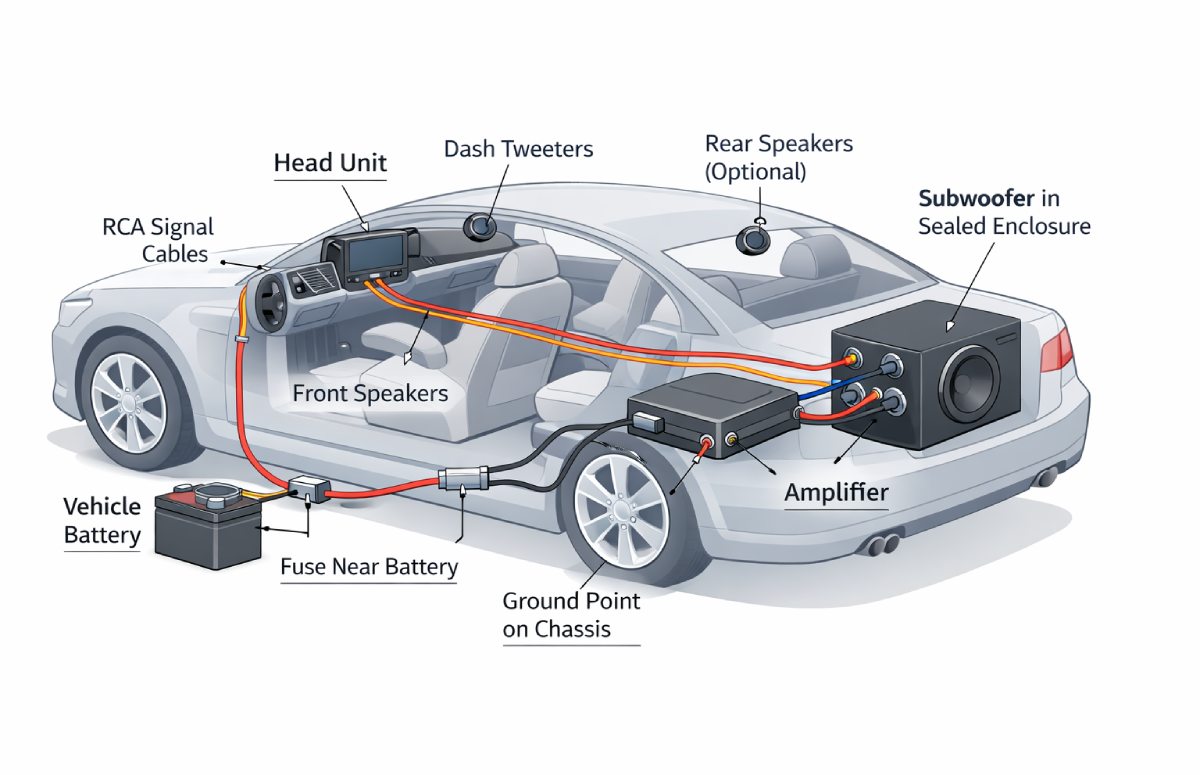
Every car audio system is built around a few essential components:
- Head unit – The source of the audio signal, handling media playback and system control.
- Speakers – Convert electrical signals into sound, usually installed in doors, dash, or rear panels.
- Amplifiers – Provide clean power to speakers and subwoofers.
- Subwoofer – Handles low-frequency bass that regular speakers cannot reproduce well.
- Wiring and power management – Delivers stable power and signal throughout the system.
- Optional processing – Equalizers or digital signal processors for fine tuning.
Each part plays a specific role. Ignoring one often leads to distortion, poor balance, or system failure.
How Audio Signal Flows in a Car
Car audio follows a simple signal path. The head unit sends an audio signal to an amplifier or processor. The amplifier increases that signal and sends it to speakers and the subwoofer. If the signal chain is weak or mismatched at any point, sound quality suffers.
Planning this signal flow early prevents common mistakes like underpowered speakers or noisy connections.
Step 1 – Define Your Goals and Listening Preferences
The best car audio system is the one designed for how you listen, not how someone else listens.
Sound Quality, Loudness, or Bass Focus
Start by deciding what matters most to you:
- Sound quality – Clean vocals, accurate instruments, wide soundstage.
- Loudness – High volume without distortion.
- Bass impact – Strong low-end response that you can feel.
These goals influence speaker type, amplifier power, and subwoofer design. Trying to maximize all three on a limited budget usually leads to compromise.
Music Genres and Listening Habits
The music you play shapes system design. Rock and acoustic music benefit from strong midrange clarity. Hip-hop and electronic music demand deeper bass. Long daily commutes favor balanced systems that reduce fatigue rather than extreme volume.
Step 2 – Evaluate Your Vehicle and Space Constraints
Your vehicle acts as the listening room. Its size, shape, and materials all affect sound.
Vehicle Type and Interior Acoustics
Sedans, hatchbacks, and SUVs behave very differently acoustically. Trunks can isolate bass, while open cargo areas allow low frequencies to spread more freely. Hard surfaces reflect sound and can cause harshness if not controlled.
Speaker Locations and Mounting Limits
Factory speaker locations limit size and depth. Door speakers may need shallow mounts. Dash tweeters affect imaging. Rear speakers are often optional depending on goals. Measuring space before shopping saves time and money.
Step 3 – Choosing the Right Head Unit
The head unit is the brain of the system. It controls signal quality, features, and expandability.
Factory Head Unit vs Aftermarket
Factory head units integrate well with vehicle electronics but often lack clean preamp outputs and tuning tools. Aftermarket units offer better sound processing, higher output voltage, and more flexibility.
In some vehicles, keeping the factory unit and adding processing is a practical solution.
Key Features to Look For
- High-voltage preamp outputs
- Reliable Bluetooth audio
- Smartphone integration
- Basic EQ and crossover controls
Strong signal quality here reduces noise and improves overall clarity.
Step 4 – Designing the Speaker System
Speakers define the character of your system more than any other component.
Component vs Coaxial Speakers
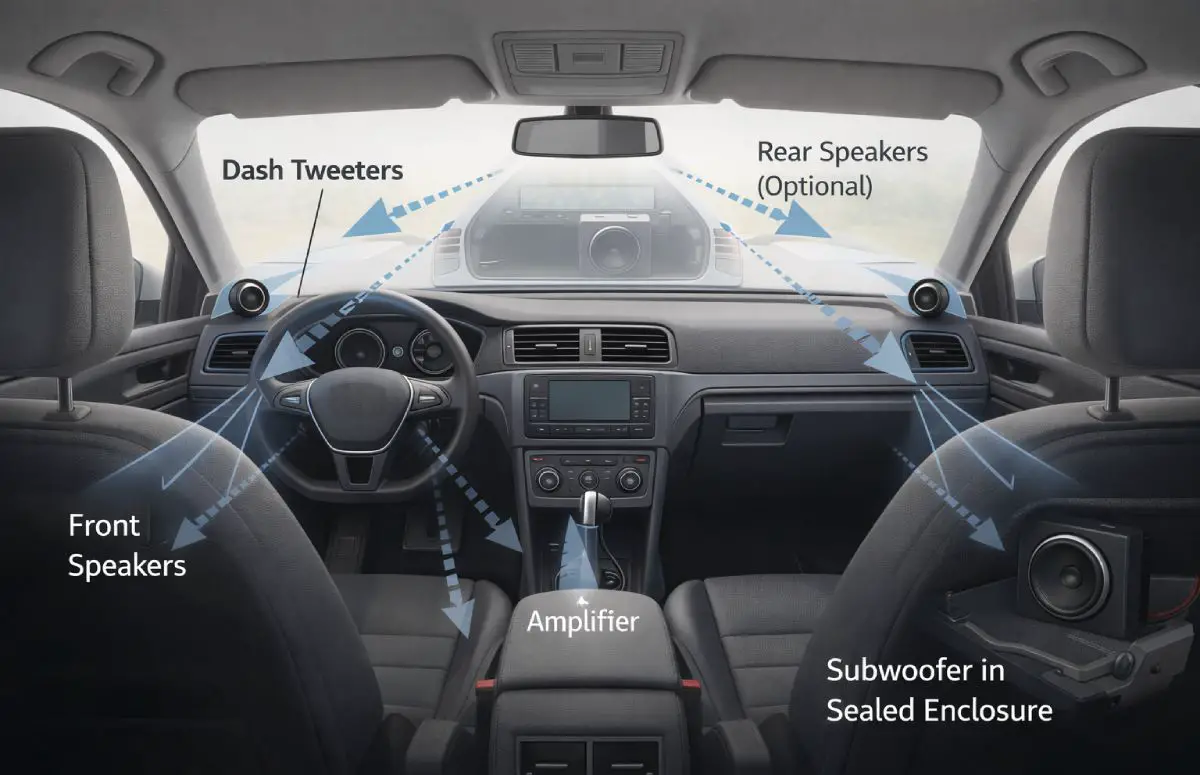
Component speakers separate tweeters and woofers, allowing better placement and imaging. Coaxial speakers combine everything into one unit and are easier to install. Components offer better sound potential when installed properly.
Front Stage Priority
The front speakers create the soundstage. Most of what you hear should come from in front of you, not behind. Investing more in front speakers delivers the biggest improvement in realism and clarity.
Rear Speakers – Necessary or Optional
Rear speakers can add fill but are not required for good sound. Many sound-quality-focused systems run front speakers and a subwoofer only.
Step 5 – Selecting the Right Amplifiers
Amplifiers supply clean power and control speaker movement.
Amplifier Channels Explained
Mono amplifiers power subwoofers. Two- and four-channel amplifiers run speakers. Five-channel amplifiers combine both into one unit, saving space.
Power Ratings and Matching
Match amplifier RMS power to speaker RMS ratings. Avoid chasing peak numbers. Proper power prevents distortion and protects equipment.
Step 6 – Planning the Subwoofer System
A subwoofer adds depth and weight that regular speakers cannot produce.
Subwoofer Size and Quantity
Larger subs move more air, but smaller subs can sound tighter. One well-designed subwoofer often outperforms multiple poorly installed units.
Enclosure Type and Placement
Sealed boxes provide accurate bass. Ported boxes deliver higher output. Placement affects bass response and should be tested when possible.
Step 7 – Wiring, Power, and Electrical Planning
Reliable wiring keeps the system safe and quiet.
Power and Grounding Basics
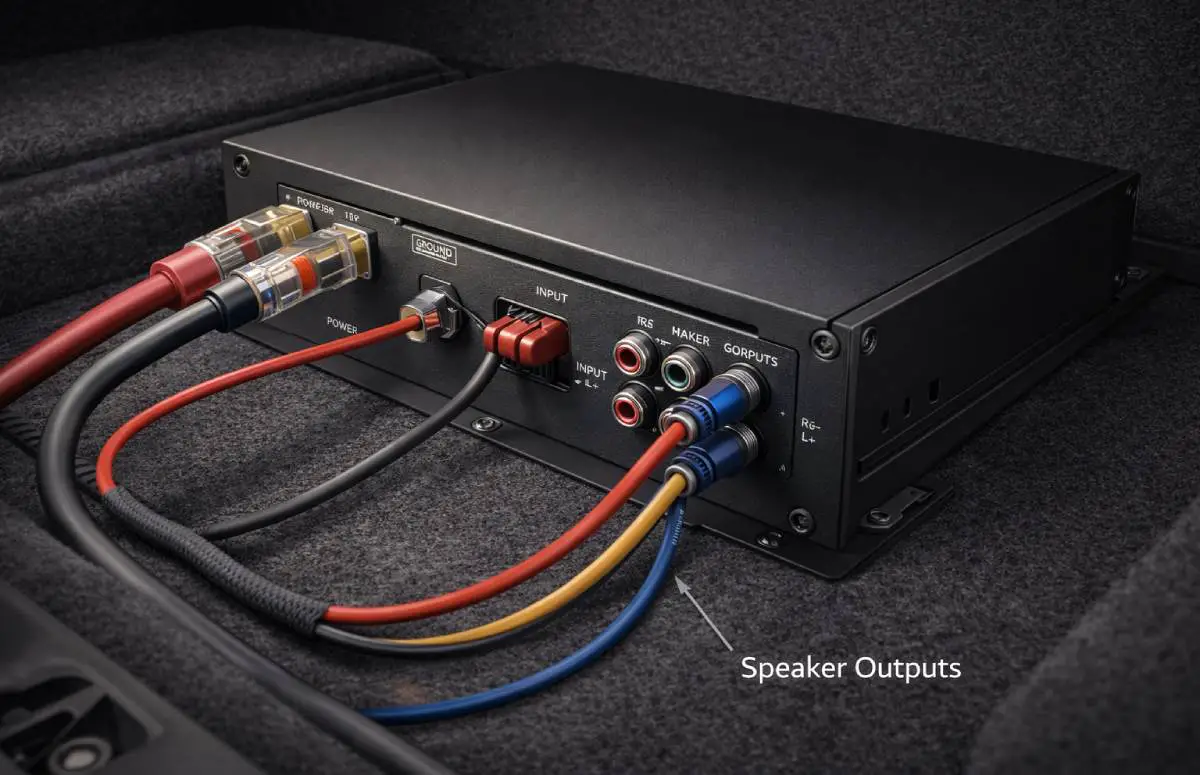
Use proper gauge power wire based on amplifier demand. Ground connections should be short and attached to bare metal. Fuse the power wire near the battery.
Signal and Speaker Wiring
Route signal cables away from power cables to reduce noise. Use quality connectors and secure all wiring to prevent vibration damage.
Step 8 – Sound Deadening and Noise Control
Reducing road noise makes your system sound clearer without increasing volume.
Why Sound Deadening Helps
Sound deadening materials reduce panel vibration and outside noise, allowing speakers to perform more accurately.
Areas to Treat First
Doors and trunk areas provide the most noticeable improvement. Even partial treatment delivers benefits.
Step 9 – System Tuning and Optimization
Proper tuning separates average systems from great ones.
Setting Gains and Crossovers
Gains should match signal levels, not boost volume. Crossovers protect speakers and improve clarity by directing the right frequencies to each driver.
Equalization and DSP Basics
Equalization corrects frequency imbalances. Digital signal processors add time alignment and precise control, improving imaging inside the vehicle.
Common Mistakes When Designing a Car Audio System
- Buying parts without a plan
- Ignoring power requirements
- Skipping sound deadening
- Improper gain settings
- Chasing loudness over balance
Avoiding these mistakes saves money and frustration.
Budget Planning – How Much Does a Car Audio System Cost?
Costs vary based on goals and quality expectations.
System Cost Tiers
Entry-level systems focus on clarity and modest bass. Mid-range systems add amplification and better speakers. High-end systems include processing, premium drivers, and extensive tuning.
Where to Spend and Save
Spend more on front speakers, amplification, and tuning. Save on unnecessary rear speakers or oversized subwoofers.
Frequently Asked Questions
Can I design a system without replacing the factory stereo?
Yes. Signal processors and line-output converters allow integration with factory systems.
Do I need an amplifier?
Amplifiers provide cleaner power and better control than head units alone.
Is a DSP worth it?
DSP tuning offers major sound improvements, especially in challenging vehicle interiors.
Can I install everything myself?
Many steps are DIY-friendly, but complex systems may benefit from professional installation.
Conclusion – Build a System That Sounds Right
Designing a car audio system from scratch is about planning, balance, and realistic goals. When each component works together, the result is clear sound, strong bass, and long-term reliability.
Take your time, upgrade in stages if needed, and focus on tuning as much as hardware. A well-designed system delivers enjoyment every time you turn the key.